Happenings
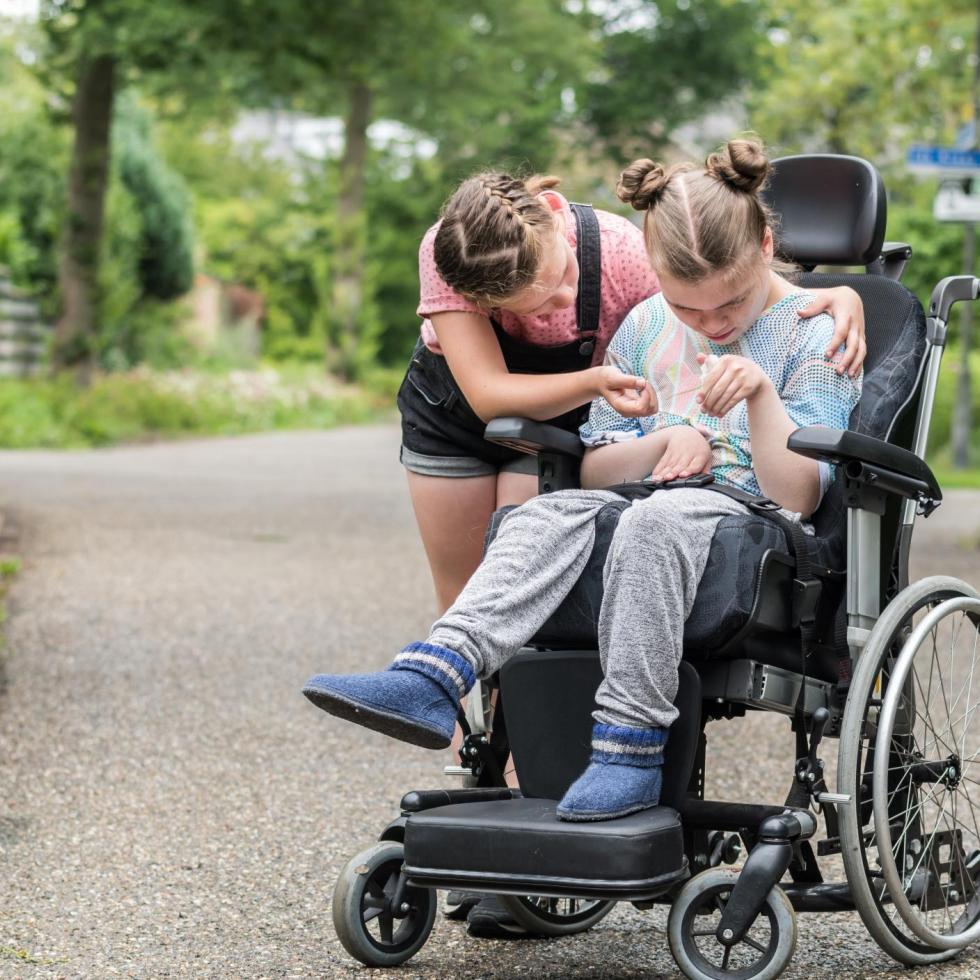
May 2, 2012Splash of Life: Watercolor for Teens with Developmental Disabilities
hosted by the Crocker Art Museum
+++++
Class will be Thursdays, May 24 to June 14
from 4:30 to 6:00 pm
Click on the image below for more details
=========================
Challenger Little League
For All Kids with Special Needs
contact Larry Wager
Phone 916-281-6858 or d7challenger@gmail.com
(click on the images below for more details)
Operating an Image-Based Record System
Apr 25, 2012Article Three
Operating eDocs - an Image-Based Consumer Record System
A popular commercial recently showing on TV would have us believe that it is mere child’s play to scan all your documents into your computer and be forever and completely organized. Most of us know better.
| ||||
A successful conversion from paper documentation to an image based record system requires (1) properly prepared input, (2) reliable hardware (scanners), software (index & retrieval as well as image processing), and, most of all, (3) well-trained people. Alta, after careful consideration of alternatives, has prepared a combination that is meeting all the goals set out at the onset of the project. Conversion is taking place at the speed projected with a minimum of disruption to the service coordinator whose records are being converted. In fact, everything done in the Scanning Operation is done with the goal in mind of satisfying the customer, in this case the service coordinator.
That old maxim “garbage in – garbage out” is turned inside out in the scanning operation where it is “excellent output requires excellent input, equipment, and people”. In most conversions the work entailed to clean up, or groom, the input outweighs all other effort. “That certainly applies at Alta,” according to Sharon Pulido, Coordinator for our External Conversion Team, “even though the records are generally in great shape.” Grooming is more than insuring that all staples have been removed and section separation sheets have been properly inserted. This is the last time (prior to digitizing) that someone will take a critical look at which documents are filed in which sections, what is possibly missing or misfiled, and which documents are no longer needed in the chart.
Grooming the chart |
The actual scanning process is similar to feeding documents into a copy machine. In this case, however, there is no paper copy output. The scanner is programmed to copy both sides of input documents at the same time and discard images of blank paper. This reduces the paper jams common with older systems that tried to feed input documents twice.
Scanning the documents |
The final, and probably the most important step in the process is verification and quality control. Before the paper chart can be permanently retired from service, we must be certain that the scanned chart has everything in it and that it is readable for every purpose. This step is also vital for feedback to the grooming and scanning stations if common or systemic problems occur.
Verification and quality control |
As with any long term project, this one has its fans and doubters. With successful projects, the fans become more excited and involved, the doubters become less vocal and may even become interested in working with the system. We’re definitely seeing the excitement grow as conversion proceeds through the case management units.
Design & Selection of an Image-Based Records System
Apr 18, 2012Article Two
Selection of Hardware, Software, and Personnel for eDocs Image Based Consumer Record System
Management at Alta California Regional Center reviews operating practices to make the best use of the limited budget available to the Center. Four years ago Alta began using a scanning storage and retrieval system to harness our ever increasing amount of accounting and financial records. That experience helped in putting together the much larger system needed for consumer records. It was also helpful to be able to visit other regional centers who had completed or were working on a similar system to the one envisioned for Alta.
Alta’s management team organized a committee to oversee the development of and conversion to an “image based consumer record system” or eDocs for short. Selecting the hardware and software was relatively easy – look for something that worked and could be purchased within our budget. Many regional centers have attempted such a system but not all have been successful. Staff visited the successful installations at Golden Gate Regional Center (San Francisco ) and Central Valley Regional Center (Fresno ). They were most impressed by the Application Extended/CoFax combination in place at Central Valley Regional Center .
The Committee developed focus groups to review the current paper chart organization and the proposed eDocs. The goal was to have a chart that gave the Service Coordinator all that he/she needed while clearly belonging to the regional center and not the SC. The top priority for Chart organization and maintenance was to minimize the need or temptation for the SC to maintain his/her own data files.
The next decision made by the eDocs Committee was logical but so subtle that it is often overlooked by companies faced with converting existing paper records to computer images. Alta decided to develop two conversion teams: one that would exist temporarily during the conversion process and one that would be a permanent part of the company staffing structure (or at least as permanent as such things are). This “permanent” team would eventually be responsible for all ongoing “maintenance” scanning such as newly created documents and charts, transfers, and normal chart maintenance for all converted caseloads.
The chart below illustrates how this works. Team A is the conversion team, hired for a specific, time-limited task of converting the paper charts to computer images. After the conversion Team A would be available to work on another project, perhaps another regional center. Team B initially would be 100% conversion. Then 99% conversion and 1% maintenance. While the conversion % decreases, the maintenance % increases until at the end of the conversion project this team is fully 100% maintenance. Rather than waiting until conversion is complete, Alta will have their maintenance team trained and in place exactly when it is needed.
So while the eDocs Committee was reassigning some employees to Team B, others were preparing a Request for Proposal for a temporary team to be in place only as long as the conversion lasted. Requests went out to companies that primarily had experience with scanning conversion. This group of potential contractors included those who had worked with students, consumers, and other temporary help. Futures Explored (aka Vocational Training and Employment – VTE) submitted a proposal that indicated superior experience and best price. As an added bonus (but not a requirement of the RFP) was the Futures Explored proposal that its team consist of regional center consumers.
After only a few months of conversion, many SCs are reporting improvements in the access of documents. There is a significant learning curve that was expected. And there are still issues that still need to be addressed such as transferring records to and from other regional centers and reactivating/deactivating archival records. One of the biggest problems is having some caseloads on imaging and others with the old paper records. Operations will be significantly improved once all the records are scanned and we can eliminate the old paper system. For that reason, completion of the conversion is a high priority.